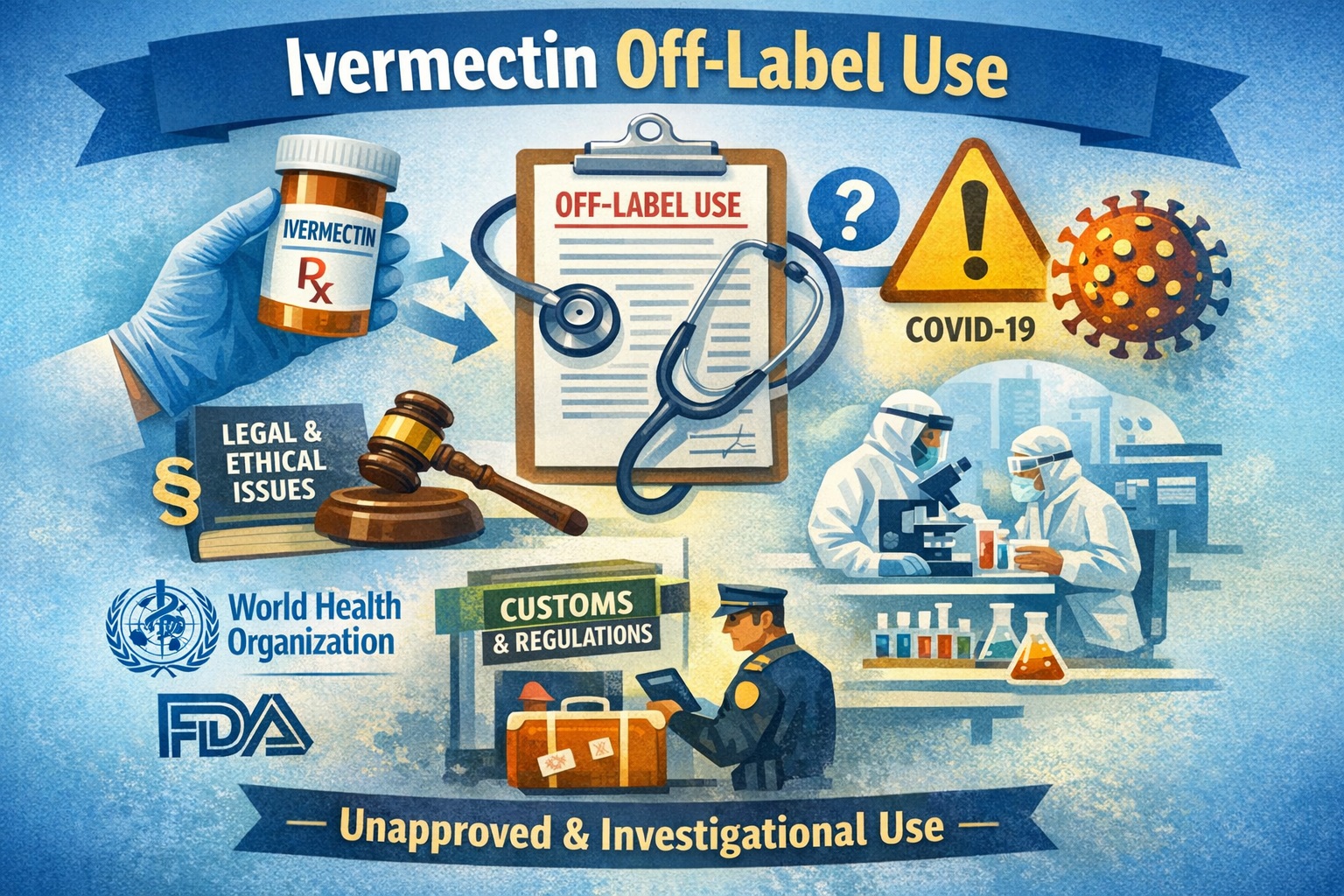
Ivermectin is a long-established antiparasitic medicine approved for the treatment of several human infections, including strongyloidiasis and onchocerciasis. Beyond its labeled indications, ivermectin has been prescribed off-label in limited clinical contexts. Ivermectin off-label uses refers to prescribing an approved medicine for an indication, dose, or population not explicitly included in its regulatory approval.
While off-label prescribing is legally permitted in many countries, it operates within a stricter legal, ethical, and regulatory framework than approved use.
Understanding Off-Label Use
Off-label use is a recognized part of modern medical practice. Physicians may prescribe medicines off-label when supported by scientific rationale, clinical judgment, and patient-specific considerations. However, off-label use does not imply regulatory endorsement, and it places greater responsibility on the prescriber regarding safety, informed consent, and monitoring.
Importantly, off-label prescribing differs from unauthorized drug use. The medicine itself must be legally approved and obtained through lawful channels.
Regulatory Position of Ivermectin
Globally, ivermectin is recognized for its antiparasitic effectiveness and is included on the World Health Organization Model List of Essential Medicines. This designation reflects its public-health importance but does not authorize new medical indications or unrestricted prescribing.
Each country independently regulates ivermectin through national medicines legislation, professional prescribing standards, and pharmacovigilance requirements.
Commonly Discussed Off-Label Contexts
Historically, ivermectin has been explored off-label for certain dermatological and inflammatory conditions where parasitic or immune-modulating mechanisms were hypothesized. These uses are uncommon and generally limited to specialist care or investigational settings.
Such prescribing typically occurs where alternative therapies are unsuitable and where clinicians believe potential benefits outweigh known risks.
COVID-19 and Regulatory Warnings
During the COVID-19 pandemic, ivermectin gained significant public attention as a proposed treatment. Regulatory authorities worldwide responded by issuing warnings that ivermectin was not approved for the prevention or treatment of COVID-19 outside properly conducted clinical trials.
In the United States, the Food and Drug Administration emphasized that available evidence did not support its use for COVID-19 and warned against misuse, particularly of veterinary formulations.
European and UK Guidance
In Europe, the European Medicines Agency concluded that existing data did not justify off-label ivermectin use for COVID-19 outside randomized clinical trials.
Similarly, the UK’s Medicines and Healthcare products Regulatory Agency warned against unapproved use and highlighted risks associated with inappropriate dosing and non-human products.
Australia and Other Jurisdictions
In Australia, ivermectin is regulated as a prescription-only medicine under the Therapeutic Goods Act 1989. The Therapeutic Goods Administration has stated that off-label use must comply with professional standards and evidence-based practice.
Other jurisdictions, including Canada, Japan, and Singapore, maintain similar positions, permitting off-label prescribing only within strict medical and regulatory boundaries.
Legal and Ethical Considerations
Off-label prescribing increases the legal and ethical responsibility placed on healthcare professionals. Clinicians must ensure patients are informed that the use is off-label, explain known risks and uncertainties, and document clinical reasoning.
From a legal perspective, adverse outcomes linked to unsupported off-label use may attract greater scrutiny from regulators or professional bodies.
Public Discourse and Market Impact
Public discussion of off-label ivermectin has significantly influenced demand patterns. In some regions, this has contributed to ivermectin supply shortages, affecting access for patients who require the medicine for approved indications.
Online communities, including ivermectin Reddit discussions, often contain anecdotal claims that do not reflect regulatory guidance or clinical evidence, further complicating public understanding.
OTC and Access Claims
Claims that ivermectin is available without prescription in certain countries can be misleading. Even where limited OTC ivermectin exists domestically, off-label use and cross-border acquisition may still violate national laws and customs regulations.
Conclusion
Ivermectin off-label uses occupy a narrow and carefully regulated space in modern medicine. While off-label prescribing itself is not unlawful, regulatory agencies consistently emphasize evidence-based practice, patient safety, and professional accountability.
For jurisdiction-specific rules, enforcement trends, and access conditions, reviewing the legal status of ivermectin remains essential before considering any off-label context.